Friday, 3 March 2023

What is RO AMC and Advantage of AMC

RO Services in Gurgaon

 RO AMC stands for Reverse Osmosis (RO) Annual Maintenance Contract (AMC). It refers to a type of service contract in which a service provider or vendor agrees to maintain and repair a reverse osmosis water treatment system for a customer over a set period of time, usually one year. The purpose of the contract is to ensure that the reverse osmosis system is operating optimally and to prevent unexpected breakdowns.

The advantages of having a Reverse Osmosis (RO) Annual Maintenance Contract (AMC) are:

Regular Maintenance: Regular maintenance ensures that the RO system is operating optimally and prevents unexpected breakdowns.

Prolonged Lifespan: Regular maintenance can extend the lifespan of the RO system, saving the cost of replacing the system.

Improved Water Quality: Regular maintenance ensures that the RO system is functioning properly, which can lead to improved water quality.

Cost Savings: By having an AMC, the cost of repairing a breakdown can be lower than fixing an unexpected breakdown.

Peace of Mind: An AMC provides peace of mind, knowing that a professional is responsible for maintaining and repairing the RO system.

Overall, a RO AMC can provide reliable, cost-effective, and quality water treatment services.

The disadvantages of having a Reverse Osmosis (RO) Annual Maintenance Contract (AMC) are:

Cost: An AMC involves an additional cost, which can be significant, especially for small businesses or households.

Limited Flexibility: An AMC may come with certain restrictions, such as limited hours of service, which can limit flexibility and convenience.

Quality of Service: The quality of service provided by the AMC service provider may not be up to the desired standards, leading to dissatisfaction.

Lack of Control: The customer may have limited control over the maintenance and repair process, leading to dissatisfaction if the service provider fails to resolve the issue.

Contractual Obligations: An AMC may come with contractual obligations that can limit the customer's ability to change or cancel the contract if necessary.

Overall, it is important to carefully consider the disadvantages of a RO AMC before entering into a contract. Comparing different service providers and their AMC offerings may be beneficial to find the best fit.


 Water purifiers services in Gurgaon

Best bhajan list


Friday, 24 February 2023

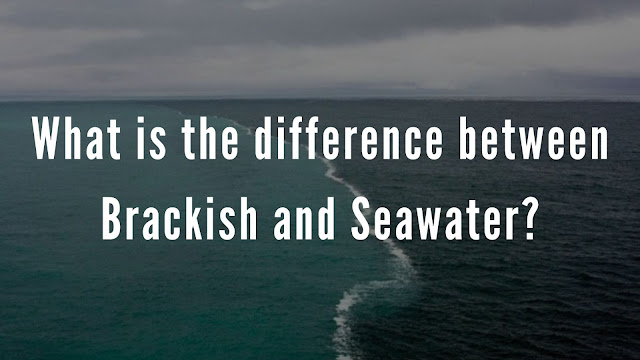
What is the difference between Brackish and Seawater?

 What is the difference between Brackish and Seawater?


Brackish water and seawater are both types of saltwater, but they have some key differences in terms of their salt content and where they are found.

Brackish water is a mixture of freshwater and seawater, and it has a lower salt content than seawater. It typically has a salinity of between 0.5 and 30 parts per thousand (ppt) and can be found in estuaries, coastal wetlands, and other areas where freshwater and seawater mix. Brackish water can also be found in underground aquifers and pumped to the surface for irrigation and other applications.

On the other hand, seawater is salt water found in the ocean. It has a higher salt content than brackish water, typically around 35 ppt. Seawater contains a wide range of dissolved minerals and gases, including magnesium, calcium, and chlorine. Seawater also contains dissolved gases and nutrients required for marine organisms' survival, making it an important habitat for a wide variety of marine life.

In summary, brackish water is a mixture of freshwater and seawater and has a lower salt content than seawater, while seawater is salt water that is found in the ocean, and has a higher salt content. Both types of water can be used for different applications, but they require different treatment methods.

For RO Repair and services

Contact us

Mobile: +91-98181-01080


RO Repair and Service in Gurgaon


Wednesday, 15 February 2023

What contaminants will Reverse Osmosis remove from the water?


Reverse osmosis (RO) systems are designed to remove a wide range of contaminants from water, including dissolved solids, heavy metals, pesticides, bacteria, and other impurities.

Dissolved solids such as salt, fluoride, and nitrates can be effectively removed by an RO system. The semi-permeable membrane used in the RO process allows only water molecules to pass through, effectively eliminating dissolved solids from the water supply.

Heavy metals such as lead, mercury, and copper can also be effectively removed by an RO system. These metals can be dangerous to human health and can cause serious health problems if consumed in large amounts.

Pesticides and other chemicals such as herbicides, insecticides, and industrial chemicals can also be removed by an RO system. These chemicals can be harmful to human health and the environment, and they can cause serious health problems if consumed in large amounts.

Bacteria, viruses, and other microorganisms can also be removed by an RO system, making it an effective way to purify water for drinking and other household uses.

It is important to note that while RO systems are highly effective at removing impurities from water, they are not able to remove all types of contaminants. For example, they cannot remove volatile organic compounds (VOCs) such as benzene and trichloroethylene. Additionally, RO systems do not remove dissolved gases such as radon and carbon dioxide. Therefore, it is important to test your water supply to determine the specific contaminants present and to choose the appropriate water treatment system to remove them.


hotel in Delhi


Friday, 30 December 2022

What is Ultraviolet (UV) and Advantage and Disadvantage


What is Ultraviolet (UV)

By using ultraviolet radiation, UV technology can destroy the DNA of living organisms like cells, viruses, and spores. The dead microorganisms remain in the water but are rendered completely harmless. Ultraviolet purifiers can only kill microorganisms, they won’t help with other contaminants such as chlorine, fluoride, or inorganic materials like metals including lead. To remove those contaminants, you’d need to pair a UV water purifier with another system. UV or Ultraviolet water purifier is a proven technology that is capable to kill waterborne disease-causing microorganisms, and pathogens such as bacteria, viruses and cysts. UV lamp releases UV lamp when running water exposed to UV light, whatever germs like bacteria and viruses are damaged, inactive.

Advantages of UV water purifier

1. Low maintenance cost

UV technology not only makes water safe to drink, but it also helps you save money on upkeep. In the water storage tank, UV lamps do not stimulate algae growth. As a result, you won't have to deal with manually cleaning the water storage tank. Change the UV lamp once a year or when it stops working.

2. Improved water savings

When hazardous bacteria and toxins accumulate in the tank water, the tank must be emptied, resulting in water waste. However, if you use a water purifier with UV technology, you won't have to worry about this. Despite the fact that the UV lamp kills all pathogens in the water tank, the bacteria' lifeless corpses remain in the water. RO water filtration comes into play to solve this issue.

3. High purification rate

 The UV water purifier is capable to deliver 2 to 4 litres of purified water within a minute. UV water purification systems disinfect water with outstanding efficiency. It’s possible to completely disinfect water in one cycle, increasing throughput and volume treated.

4. Very less manual cleaning

If you have a UV water purifier with a storage tank, it requires cleaning twice a week, whereas without a storage tank water purifier needs almost no manual cleaning.

5. Flexible UV intensity

One of the common misconceptions of UV purification is you need a bigger system to treat water to a higher quality. This is not true. You need the correct disinfection dose (mg/cm²) which is determined by UV intensity, not system size. System size determines the flow rate.

Disadvantages of UV water purifier

1. Germs' bodies remain in purified water

UV water purifier kills waterborne disease-causing bacteria, viruses and other pathogens, but their dead bodies still remain in purified drinking water. In case of fewer germs not being exposed to UV light and remaining life or redevelop and reproduce their population and makes water impure.

2. UV Doesn’t Improve Water’s Taste

Microorganisms like bacteria and viruses might be dangerous to drink, but they don’t affect water’s taste. Using a UV water purifier, before and after purification taste and colour does not alter. If treating water has a bad smell, or odour then use the Activated Carbon water purifier with a combination of UV water purifiers.

3. UV Water Filtration Requires Electricity

A UV water purifier works by emitting UV light, and the UV lamp needs to be powered by an electricity supply. Although UV filtration has low operating costs and doesn’t use more electricity than a standard light bulb, installing a UV water filter will increase your energy bill slightly.

4. UV water purifier does not remove toxic chemicals

UV light exposure does not affect chemicals like chlorine, or fluoride. If your water contains harmful chemicals, heavy metals, volatile organic compounds, or sediment, a UV water treatment system can’t be used to remove these contaminants. That’s because ultraviolet light is only effective in treating living organisms.

5. Does not effective on turbid, mud water

 Undissolved Solids like sand, mud and other organic solid matter become an obstacle to passing UV light through the water.

UV water purifier does not purify hard water. UV water purifier designed for purifying low TDS(Total Dissolved Solids) lake, and river water.


Thursday, 22 December 2022

What is Water Purifiers


Water Purifiers

RO (Reverse Osmosis) is a blessing in the world of water purifiers. It proves to be a highly efficient process for removing undesirable chemicals, and organic and inorganic materials, separating the pollutants and contaminants from water over a semi-permeable membrane. RO purifiers are best for water with high TDS content. So if you are staying in an area where the water supply contains a high amount of TDS, buying the RO water purifier for safe drinking water is recommended.  A water purifier treats water using one or more purification methods to make it safe.

Difference between water purification and water filter (Water purifiers vs water filters)

Water filters

Water filters and water purifiers can offer several incredible health benefits by removing certain impurities from drinking water. This improves the taste, colour, and purity of the water. Water filtration focuses on impurities such as bacteria or larger particles. Many water filtration systems use activated carbon to block out unwanted microscopic contaminants from entering your drinking water. Because most toxic water impurities are carbon-based, water filters can be extremely effective at keeping your water safe and healthy. 

Water Purification

Like water filters, water purifiers work to remove impurities from water and Water purification works to further purify water from contaminants that filtration methods can’t address. It removes the chemicals, viruses, and biological contaminants that filters don’t. Besides, water purification involves processes like UV treatment, distillation, deionization, and Reverse Osmosis.

Types of water purifiers

There are three methods of water purification: reverse osmosis (RO), distillation, and ultraviolet (UV).

Reverse Osmosis(RO)

Reverse osmosis is the most commonly known method of water purification. Reverse Osmosis is a very popular method of water purification that uses membrane technology. It is used to remove dissolved salts, impurities, and germs from the water. The semipermeable membrane allows only water to pass through it and leaves harmful chemicals, dissolved salts, and microbes suspended in water.

Distillation

Distillation is one of the oldest methods of water treatment and is still in use today, though not commonly as a home treatment method. It can effectively remove many contaminants from drinking water, including bacteria, inorganic and many organic compounds. Distillation is a type of water purification that separates contaminants from the water through boiling. When water is boiled, clean water evaporates into steam while the contaminant particles are left behind.

Ultraviolet (UV)

By using ultraviolet radiation, UV technology can destroy the DNA of living organisms like cells, viruses, and spores. The dead microorganisms remain in the water but are rendered completely harmless. Ultraviolet purifiers can only kill microorganisms, they won’t help with other contaminants such as chlorine, fluoride, or inorganic materials like metals including lead. You’d need to pair a UV water purifier with another system to remove those contaminants.


Chemical free Dog shampoo


Friday, 4 November 2022

Blue Star Water Purifier

 Blue Star Water Purifiers 

RO Services in Gurgaon
Blue Star Water Purifier 


One of our most basic needs in life is water. And if the water is not pure at your home, you are putting your entire family’s health at risk. The age-old idea of boiling water is insufficient to remove its dissolved impurities due to the rising levels of pollution and contamination in water. Installing a water purifier is the best course of action. Blue Star is an affordable water purifier. 

Blue Star has launched as many as 13 models and 11 out of them use double-layered RO+UV protection to ensure that the water is completely safe and pure. This water purifier protects you and your family from all kinds of microbiological impurities like bacteria, viruses, protozoa, and cysts.


The purification process of Blue Star water purifiers:-

Easy Temperature Settings. Get hot or cold water depending on the ambient temperature.

Double Layered RO + UV Protection and Activated carbon, which removes colour, organic impurities as well as chlorine. This ensures that your drinking water is absolutely safe without any compromises.

Ultra High TDS Removal and the water your drink is safe and pure.

Large Tank Capacity.

Features of Blue Star Water Purifiers

Faster and powerful cooling as well as purification and Stainless steel body

Protection from accidental burns with the child lock function that can be activated in the ‘Heating’ mode.

Electronic dispensing button which is a Convenient operation with an electronic dispensing button replacing the manual tap.

Separate the hot water faucet to provide safety while dispensing hot water in conjunction with the child lock function.

UV fail alert gives an indication that the UV lamp life is over and automatically stops the water flow so you never drink harmful water.


5 Top Water Purifier Issues That People Face

Contamination: One of the biggest issues that people face with water purifiers is the presence of contamination in the purified water. Even ...